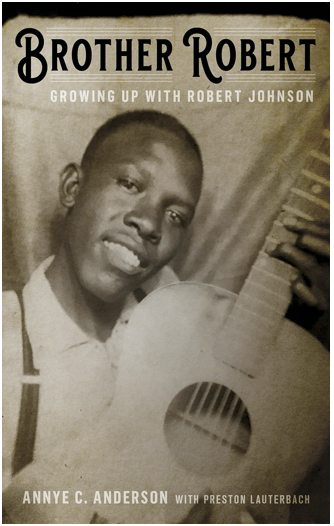
Bridge and the blues are a good mix – even though poker might be the first imagined table game that comes to mind. References to cards are throughout the blues, and I was reminded of a little song called “Little Queen of Spades” by Robert Johnson that makes this post an appropriate one to write.
Johnson is known for a few things: His part in the 27 Club, his rumored connective-tissue disorder (Marfan Syndrome) and his extra-ordinary reach on the fretboard. He was also known for being one of the most famous musicians to attribute a Faustian deal to his talent.
Here’s more about Robert Johnson, card games and the trickster at the crossroads.
Introducing Johnson
For a little background on Robert Johnson, fictional versions of him have appeared in TV shows like Timeless and movies like Crossroads; he’s also been the subject of a documentary called Devil at the Crossroads (Remastered, Netflix) and a host of several others.
Blues-men in general – and perhaps the entire blues genre – was associated with dancing, partying and staying up past midnight. This meant a strong association that made blues as good as the devil’s music at the time.
Johnson capitalized fully on the myth: As far as everyone was concerned, he sold his soul in exchange for talent.
If you want to know what this could have to do with bridge, it’s time to go a little further back.
Ruling the Crossroads
The Faustian legend has its name thanks to the story of Faust – although there are both much earlier and later versions of the same story. Someone meets a mysterious stranger who offers a “deal” of talent, and who usually shows up to collect their dues later on (hence, Johnson’s mysterious and violent death).
In each story, these elements are seemingly consistent, although the talent tends to change. For Paganini, it was violin – and Robert wasn’t the only guitarist to take hold of the legend, but Tommy Johnson did it years before.
Sometimes, the participant is outright said to be the devil; who else would be in charge of deals like these? In other versions of the story, the traditional “devil” is replaced with a trickster God from the appropriate mythology instead.
It’s with the trickster where you’ll find references to things that aren’t just playing the guitar.
Cards and Crossroads
The Crossroads of soul-selling legend is a very real one located in the Southern United States, but many legends take the “crossroads” aspect to mean a metaphorical meeting place between spirits-and-humans – and thus, it can be anywhere.
Shamans and traditional healers are usually the representatives said to open up said crossroads during “trance” or ritual, during which communication with what’s “on the other side” becomes possible. Sometimes this includes wishes for prosperity, but might also include what became seen as Faustian-like “deals.”
What the heck does this have to do with cards?
The trickster.
In West African mythology, the trickster is referred to as Anansi; often represented by a spider or snake (and associated with roosters, dogs and other animals). (Yes, it’s a character in American Gods, too…) Elsewhere, you’ll see the trickster appear as a jackal, as a wolf or as Papa Legba.
Seen in mythologies where he isn’t seen to be the devil, he plays tricks, makes deals and sometimes bestows talents – but always with some type of edge. He can be represented as an old man with a cane (and often a pipe), and doesn’t just represent musical talents, but also gambling luck.
Papa Legba is often called on for gambling, and just as often represented carrying a deck of cards as he is a hat or cane.